Digital Inverter Working Principles, Components, Applications, and Advantages
Digital inverter technology can be defined as a technology for converting and controlling electrical energy by means of power electronics using digital controls, semiconductor switches, and sophisticated modulation. Unlike traditional inverters, digital inverters provide precise voltage, frequency, current, and waveform regulation with the help of digital processing and feedback. Such functions allow for efficient energy management in renewable energy generation systems, energy storage, electric vehicles, industrial machinery, and backup energy applications. The increasing use of energy-efficient electrical systems, power management systems, and renewable energy solutions is driving the digital inverters market.
How Digital Inverter Technology Operates
A digital inverter is a device that generates controlled alternating current (AC) power out of the direct current (DC) power supplied to it through semiconductor switches and digital algorithms. The entire process is accomplished in various stages which control the voltage, frequency, waveform, and output power depending on the application.
- Conversion of Input Power:The inverter takes in DC power that is obtained from sources like battery power, photovoltaic power sources or DC power supplies. When the system uses AC power as input, it undergoes rectification to convert AC power to DC power. The DC power thus serves as the input power source.
- Forming of the DC Link:The DC power obtained above goes through the DC link circuitry where there are capacitors and other parts. The DC link stabilizes the voltage in order to give the switching stage DC power.
- Digital Switching:The power semiconductors such as the Insulated Gate Bipolar Transistor (IGBT) or Metal Oxide Semiconductor Field Effect Transistors (MOSFETs) turn the DC supply on and off very quickly. This operation is done under the supervision of a microcontroller or a digital signal processor through certain control algorithms.
- Pulse Width Modulation: The pulse width modulation technique adjusts the switching time periods of individual pulses so that the desired waveform is generated. By varying the width of pulses, the digital controller can regulate the voltage and frequency.
- Generation of Output Waveform: The switching section generates a pulse waveform with high frequency which is further filtered to provide an output waveform which is smooth in nature. As per the type of inverter used, the output can be controlled in order to get the required waveform with appropriate voltage and frequency.
- Feedback and Digital Control:Various sensors monitor the parameters like output voltage, current, temperature and frequency. The digital control unit processes this information and matches the actual operational data with the required programmed data. This helps in controlling the switching signals according to the need of the situation.
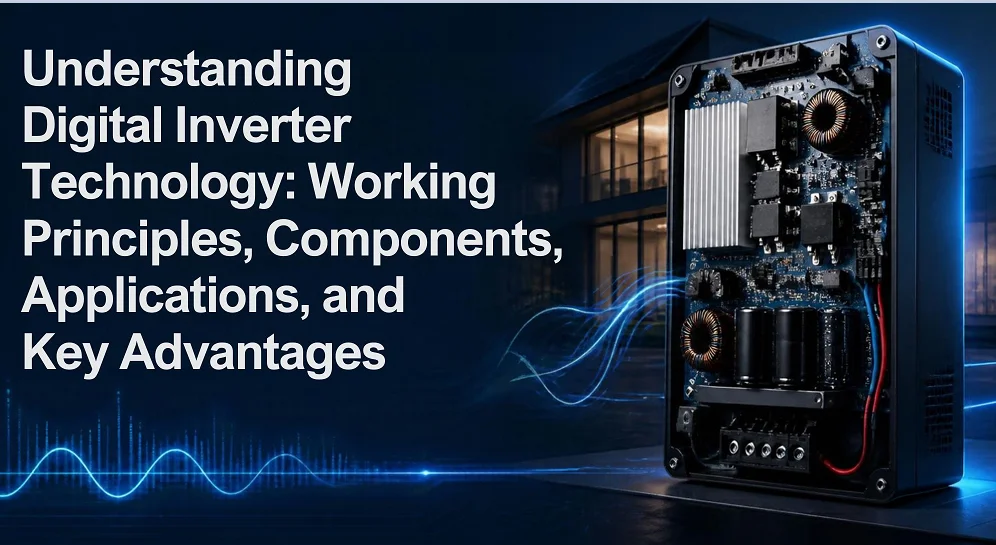
Key Components of Digital Inverter
Components that form digital inverter include electrical and electronic control units that function in a synchronized manner to help regulate the power properly. Each of these components has its unique functions ranging from powering, regulation of semiconductor switches, filtering of the output and ensuring that the circuit is protected from any abnormal operating conditions.
- Rectifier: Rectifier changes the AC supply received by the inverter to DC. Diode or any other controlled semiconductor device can be used to make this change. DC power produced will form the input needed by DC-link section of the inverter.
- DC-Link Capacitor: The role of DC-Link capacitor is to act as an energy storage medium and stabilize the DC voltage between the rectifier and the switcher sections. It acts as an absorber of voltage fluctuation and some variations in the input power. Proper DC-link design is essential for stable inverter operation.
- Power Semiconductor Switches: Power semiconductor switches regulate the flow of electrical energy by means of switching actions. MOSFETs, IGBTs, and latest wide-bandgap power semiconductor switches made from silicon carbide and gallium nitride materials are employed based on the need for high voltage, power, frequency, and efficiency of switching operations. Switching capability plays a key role in the efficiency, performance, and cooling of an inverter.
- Microcontroller or Digital Signal Processor:A microcontroller or DSP is the controller element of a digital inverter system. It receives inputs from various sensors and produces control signals after performing control functions. The high-speed digital signal processing capability allows the inverter to switch its operating modes based on the load condition, input and output requirements.
- Gate Driver:The gate driver provides the necessary electrical signals for the control of power semiconductor switches. The electrical signals generated by the microcontroller are amplified and conditioned by the gate driver for proper switching of devices. Also, gate drivers offer isolation and protection in many inverter topologies.
- Feedback Circuits and Sensors:The sensor senses different kinds of variables like the voltage, current, frequency, and temperature. These sensors send these variables to the digital controller via the feedback circuit, where they are compared against some reference values. Only due to the operation of the closed-loop system can we achieve accurate control and rapid response to the changes in the load.
- Output Filter: The output filter filters out high-frequency switching pulses of the semiconductor stage and thus ensures a better quality of AC output. In order to achieve better filtering, inductors, capacitors, or their combination can be used in the filter.
- Cooling and Protection System: A system of cooling and protection provides reliable operation by managing heat dissipation and possible dangerous electrical conditions. In the case of an inverter, various devices and technologies can be used for the mentioned purposes – from heat sinks and fans to liquids.
Types of Digital Inverter Technology
The digital inverters are categorized based on their waveform type, connection scheme, and application environment. The various types of inverters have been created for different needs of power conversion and control in various application areas.
Pure Sine Wave Inverters
The pure sine wave inverters provide smooth AC waveform similar to that provided by utility companies. Such inverters are appropriate for use in sensitive equipment.
Modified Sine Wave Inverters
The modified sine wave inverters provide stepped waveforms with a simplified switching scheme.
Grid-Tie Inverters
Grid tie inverters synchronize the produced electricity with that of the grid and usually feed photovoltaic systems and distributed generation systems.
Off-Grid Inverters
Off grid inverters function independently of the utility grid, supplying electricity from sources such as batteries, solar systems, or other stand-alone systems.
Hybrid Inverters
Hybrid inverters involve multiple power sources, allowing for coordinated operations of generation, batteries, load, and grid electricity.
Applications of Digital Inverter Technology
The application of digital inverter technology is common to various industries since it enables accurate regulation of voltage, frequency, current, and power delivery.
| Applications | Key Functions |
| Renewable Energy Systems | A digital inverter converts electricity from solar photovoltaic modules and other renewable energy sources into electricity in usable alternating current and ensures proper synchronization with the grid. |
| Energy Storage Systems | Battery energy storage systems apply digital inverters for bidirectional power delivery to and from batteries and loads on the grid. |
| Electric Vehicles | The power delivered to electric traction motors in electric cars is regulated through inverters. |
| Industrial Motor Drives | Industrial motor drives apply digital inverters for the control of industrial motors’ speed, torque, and power consumption. |
| Uninterruptible Power Supply Systems | Inverters are used in the UPS system to ensure that there is a constant supply of alternating current (AC) to vital equipment when there is interruption in the electrical utility source. |
| Domestic and Commercial Appliances | Digital inverters are installed in air conditioners, refrigerators, heating systems and other domestic appliances to control the operations of their motors. |
| Data Centers | Data centers use digitally-controlled inverters in their power management systems to ensure stable electricity supply. |
Main Advantages of Digital Inverter Technology
Digital inverter technology provides a number of advantages over conventional power converters through efficient electronic control, intelligent monitoring, and effective switching operations. The mentioned features allow the use of digital inverters in applications that require high levels of efficiency and power quality.
- High Efficiency: Efficient electronic control allows optimizing the operation of switching and power delivery processes in order to avoid unnecessary energy losses.
- Voltage and Frequency Control: Digital processing allows effective voltage and frequency regulation in order to ensure stable operation under varying loads.
- High Power Quality: Modulation and filtering technologies can ensure the production of high-quality output signals by minimizing harmonic content in the output voltage.
- Fast Response: Digital controllers can effectively analyze feedback data and optimize switching operations under varying input voltages and loads.
- Minimized Power Losses: Advanced switching technologies along with sophisticated semiconductor components enable reduced losses due to both conduction and switching during the conversion of power.
- Small Size: The ability to operate at higher frequencies and use digital control systems allows for the development of compact inverters.
- Monitoring and Protection: Digital technology constantly tracks voltage, current, temperature, and other values allowing diagnostic analysis and quick response to unusual situations.
Power Conversion Enhancement Through Digital Inverter Technology
Digital inverter technology is an emerging solution for electrical power conversion that is highly efficient, accurate, and reliable. This technology allows one to regulate the voltage and frequency accurately due to its capabilities to include digital control, semiconductor switching, sensors, feedback control, and modulation. Future developments in semiconductor technology, digital control, and energy management systems may further contribute to increasing the application of this technology. These advances are driving development in the digital inverter market. According to Pristine Market Insights, technological advancements may further strengthen the position of digital inverters in modern power management systems.
Author Bio: Tejakurane is a research analyst specializing in electrical and electronics technologies, power systems, and emerging engineering solutions. Teja focuses on digital inverter technology, electronic components, and energy-efficient power conversion. Through research-driven insights, Teja explores inverter operating principles, practical applications, and technological advancements that support reliable electrical performance across residential and industrial environments.